An open is the start of a path, not the result
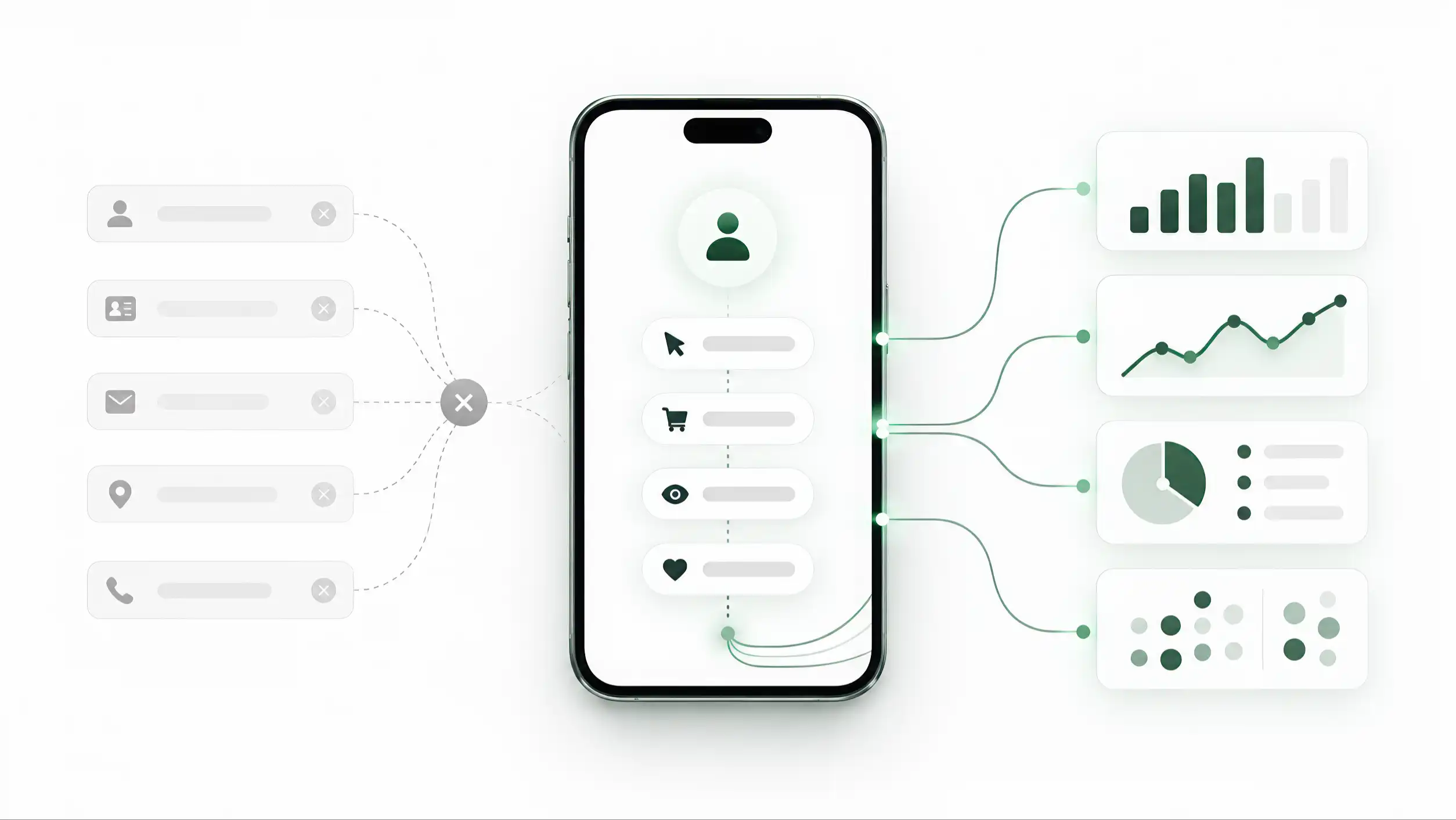
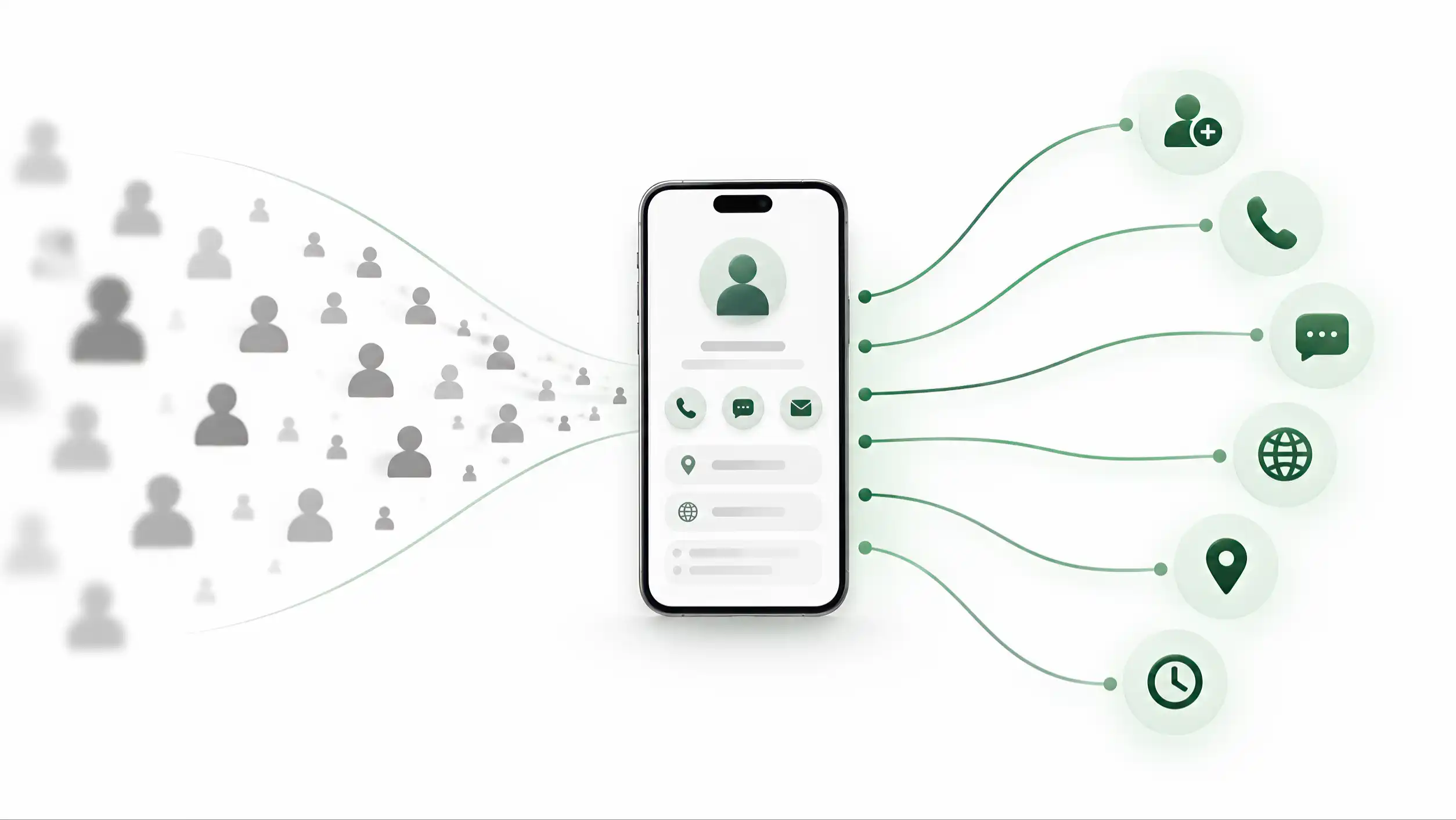
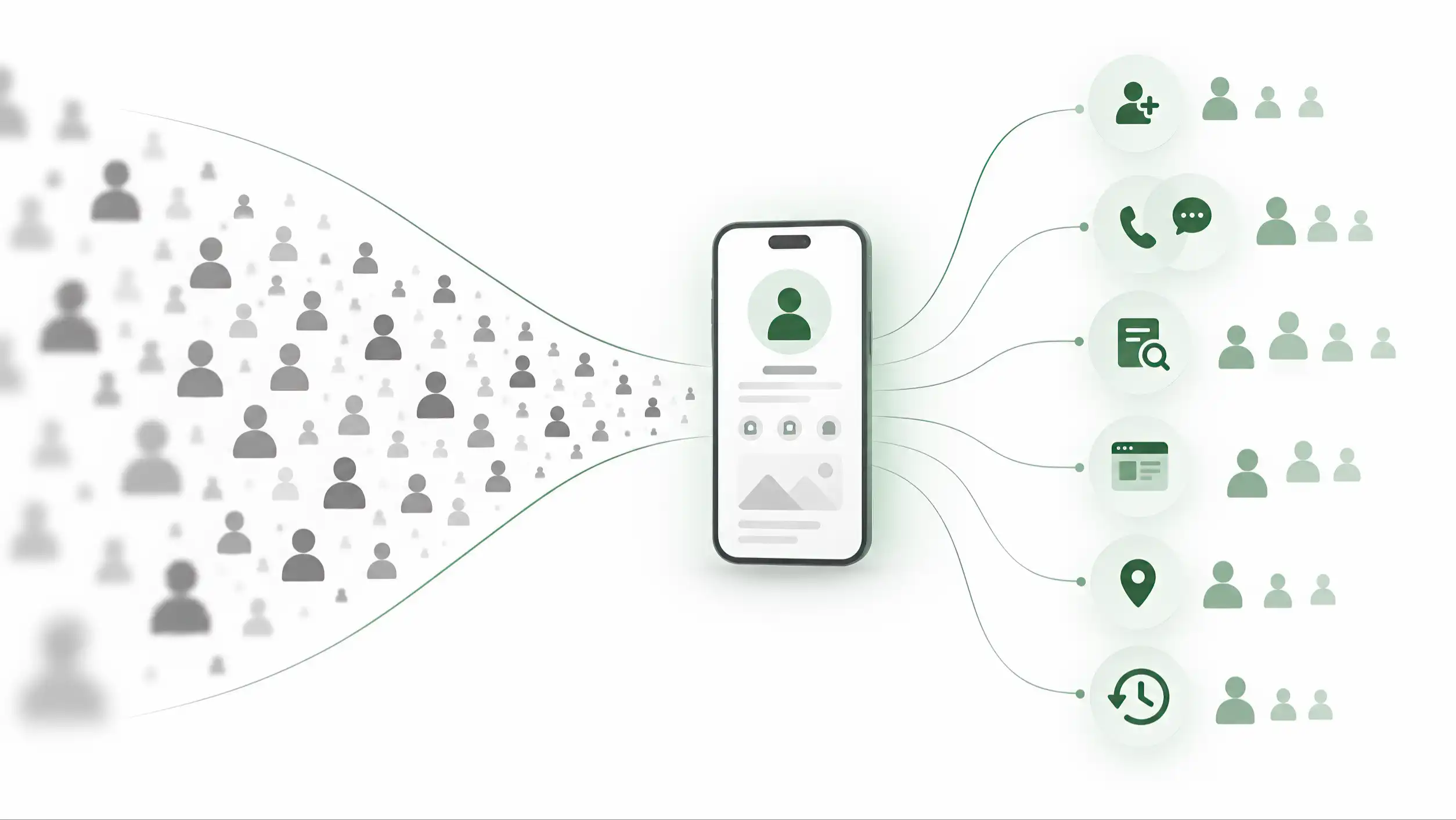
When a digital profile loads, the visitor has reached a starting point, not a conclusion. That distinction sounds simple, but it changes how the entire experience should be interpreted. One person may open the profile and leave immediately. Another may confirm the person’s identity, read a service description, save the contact, open WhatsApp, visit the website, forward the profile to a colleague, or return days later. All of those journeys begin with the same event: the profile opened. They do not represent the same behavior.
Experience-mapping work is useful here because it treats a customer interaction as a sequence of touchpoints rather than a single number. Jim Kalbach’s work on experience mapping emphasizes the value of seeing the journey from the customer’s perspective and identifying the different paths people can take. Applied to a digital profile, the open is the entrance to that map. The next steps tell the more useful story.
This is why a raw open count has limited explanatory power. It tells the business that access happened. It does not tell the business why the person arrived, what question they were trying to answer, whether the profile gave them enough confidence to continue, or what happened after they left the page. Two profiles can record the same number of opens and still support very different customer journeys.
A useful mental model is a decision tree. After the page appears, the visitor repeatedly makes small decisions: stay or leave, scan or read, open a section or ignore it, save the contact or postpone, move to WhatsApp or keep researching, return later or never come back. Those decisions are influenced by the visitor’s purpose, the context in which the profile was opened, the clarity of the content, and what the page makes easy to do next.
The business should therefore avoid treating the profile as a container that is either “viewed” or “not viewed.” It is better understood as a routing layer in a wider relationship. The profile may help someone identify a person, verify credibility, compare services, retrieve a phone number, open a location, save a contact, or move to another channel. Each route has a different meaning.
For this article, the important question is not yet which action is most valuable or how to rank events. Those are separate measurement questions. The focus here is the journey itself: what kinds of paths begin after an open, how those paths can be interpreted without overclaiming, and how the profile can be designed so that useful paths are easier to complete.
The visitor is reducing uncertainty before taking action
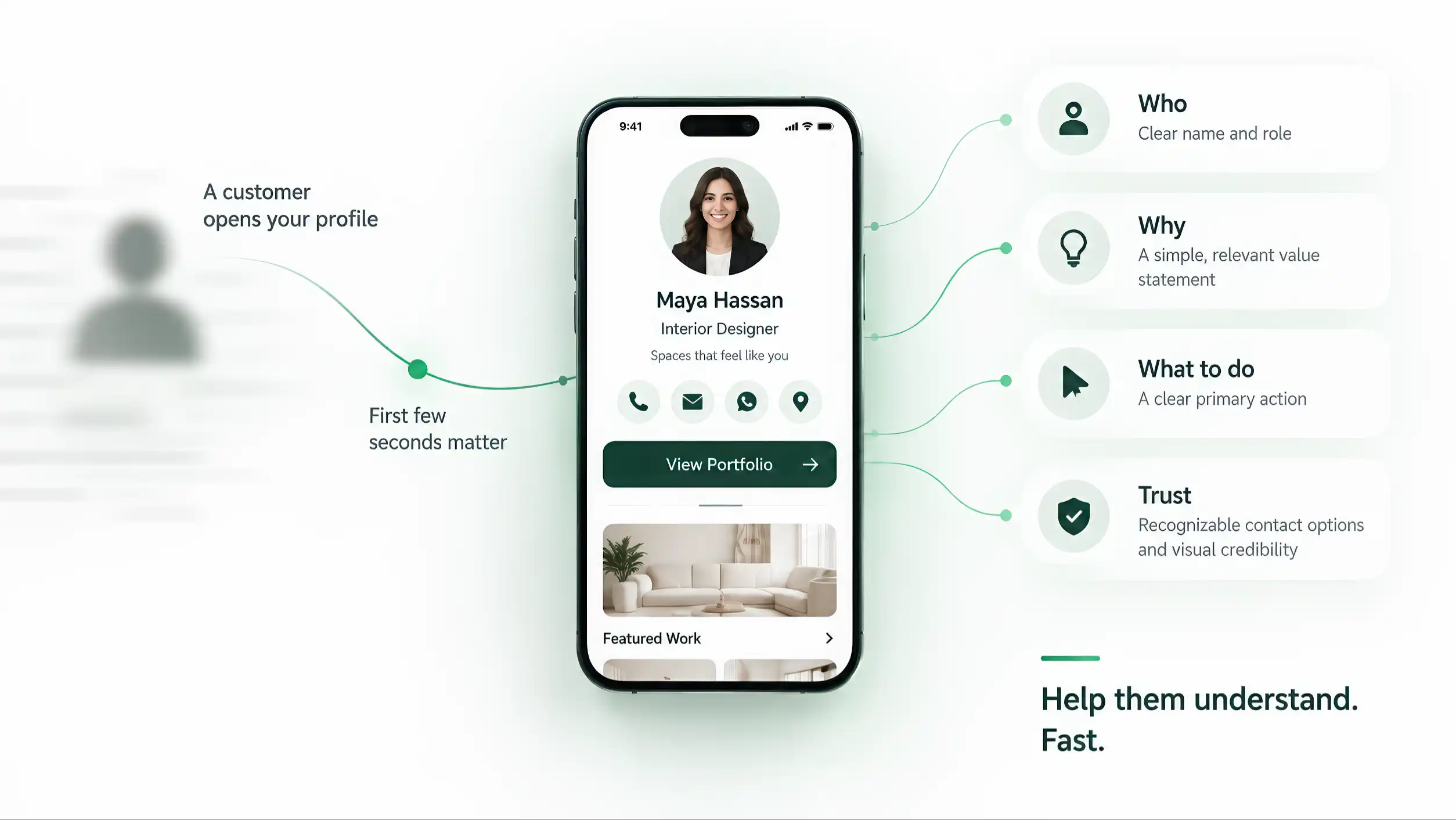
Most people do not open a digital profile because they want to admire the interface. They are usually trying to reduce uncertainty. They may be confirming the identity of someone they just met, checking whether a business is relevant, looking for a specific service, verifying contact information, deciding whether the person appears credible, or trying to find the easiest next step. The profile is valuable when it helps answer those questions with less effort.
Don Norman’s work on human-centered design is relevant because it treats design as a way to make intended actions understandable and reduce unnecessary mental effort. Steve Krug makes a similar practical argument for the web: users should not have to stop and puzzle over what a page means or where to go. In a digital profile, that principle affects behavior after the open. Every unanswered question increases the chance that the visitor will hesitate, backtrack, search elsewhere, or leave.
Uncertainty is not one thing. A visitor can be uncertain about identity: “Is this the same person I met?” They can be uncertain about relevance: “Do they offer what I need?” They can be uncertain about trust: “Is this information current and professional?” They can be uncertain about process: “Should I call, message, book, save this contact, or visit the website?” Different sections of the profile reduce different kinds of uncertainty.
This matters because two visitors may look similar in analytics while experiencing very different states of mind. One may spend a minute reading because the profile is useful and the decision deserves attention. Another may spend the same minute because the page is confusing and the desired information is hard to find. Duration alone cannot distinguish those situations. The sequence of what the visitor chooses to inspect is often more informative.
A profile that reduces uncertainty well tends to create a coherent path. The visitor can understand whose profile this is, why it matters to them, what information is available, and how to continue. A profile that reduces uncertainty poorly creates detours. The user jumps between sections, opens external pages to confirm basic facts, or leaves to search for the business elsewhere.
This does not mean every profile should be stripped down to one button or one sentence. Different customers need different levels of detail. The stronger principle is that information should answer real questions in a sensible order. The page should help the visitor move from “Who is this?” to “Is this relevant?” to “What should I do next?” without making them reconstruct the logic themselves.
Later articles in this series deal specifically with first-screen UX and action hierarchy. Here the point is broader: behavior after an open is partly a record of uncertainty being resolved, delayed, or left unresolved. Reading the journey with that lens makes the analytics more useful and the design decisions more grounded.
A short visit does not have one meaning
Short sessions are easy to misread because they look simple. A visitor opens the profile, spends little time on it, and leaves. The tempting conclusion is that the page failed. Sometimes that is correct. It is not a safe conclusion without context.
A short visit can be accidental. Someone may tap an NFC card out of curiosity, scan a QR code without knowing what it opens, or follow a forwarded link that is not relevant to them. In those cases, a quick exit may simply mean the wrong person reached the page. A short visit can also reveal a technical or design problem: slow loading, unclear identity, broken content, a language mismatch, or a page that does not match the physical context that produced the open.
But short visits can also be successful. A returning customer may open the profile only to retrieve a phone number. A person standing outside a location may need the directions link and nothing else. Someone who already knows the business may tap WhatsApp within seconds. A colleague may open the profile, save the contact, and leave. In each case, the page did useful work quickly.
This is why session duration should be interpreted together with the path and the context. Time is descriptive, not automatically evaluative. A long session is not proof of interest, and a short session is not proof of rejection. The same principle applies to scrolling. A person may scroll deeply because the content is engaging, or because the information architecture forces them to search. The observation becomes meaningful only when paired with what the visitor was likely trying to do and what happened next.
There is another complication: the measurement system itself may not see the whole interaction. A visitor can open a phone or messaging app and continue the relationship outside the profile. A page may therefore appear to have ended while the customer journey continued elsewhere. Conversely, a session can remain technically open while the person has stopped paying attention. Digital traces are useful evidence, not a perfect recording of human attention.
The practical response is to avoid arbitrary universal thresholds such as “under ten seconds is bad” or “more than one minute is good.” Those rules are attractive because they are easy to report, but they ignore the purpose of the page. A contact-oriented profile should allow some tasks to finish quickly. A service portfolio may require more exploration. A review stand may be successful when the visitor moves to the review destination almost immediately.
When short visits are unusually common, investigate rather than label them. Compare entry contexts, device performance, language, landing state, and whether any immediate actions occur. The goal is to form a plausible explanation and test it. Journey analysis is strongest when it turns an ambiguous signal into a better question instead of pretending that the signal already contains the answer.
Exploration is the middle layer between arrival and action
Between opening a profile and taking a clear action, there is a large middle layer of behavior: exploration. The visitor scrolls, opens a section, checks services, looks at reviews, visits a portfolio item, returns to contact details, opens a map, or compares several pieces of information. These actions do not necessarily mean the person is ready to buy, call, or book. They show that the visitor is investigating.
This middle layer matters because it prevents a false binary view of the journey. If the only categories are “opened” and “converted,” every person who has not yet taken the final action looks the same. In reality, someone who immediately leaves is in a very different state from someone who reviews services, opens the website, saves the contact, and returns later. Exploration gives the business a way to see that difference without overstating it.
Steve Krug’s work on web usability and information design is useful here because it focuses on intuitive navigation and reducing the amount of thinking required to find the next step. A digital profile is much smaller than a complex website, but the same principle applies. The order of information influences which paths are easy. Sections that are visible and clearly named are more likely to be inspected. Content hidden behind vague labels or excessive scrolling may receive less attention even when it is important.
Exploration can therefore reveal both interest and structure. If visitors repeatedly move from the identity block to services and then to contact, that may reflect a natural decision sequence. If they bounce between several unrelated sections before reaching a basic phone number, the path may be signaling unnecessary work. If a section receives attention but almost never leads anywhere else, it may be informative but disconnected from the next step.
The business should resist turning every exploratory behavior into a score. A scroll is not automatically “low intent,” a service view is not automatically “medium intent,” and a website click is not automatically “high intent” in every industry. The meaning depends on the job of the profile. This article is about reading the path; a separate measurement framework can later decide which events deserve priority.
Exploration is also where content quality becomes visible. The profile may successfully attract attention but fail to answer the next question. A visitor can read several sections and still leave because pricing is missing, the service scope is vague, the portfolio lacks evidence, or the contact route is hidden. In that case, the problem is not that the person was uninterested. The journey may show interest that was not converted into confidence.
For teams reviewing profile performance, a useful question is: “What do people tend to inspect before they act, and where do they stop?” That question turns exploration into a diagnostic layer. It helps the team understand how visitors move through the profile rather than reducing them to a final yes/no outcome.
An action reveals direction, not a guaranteed outcome
Actions are easier to interpret than raw opens because they show that the visitor chose a direction. A person who taps WhatsApp is doing something different from a person who only reads the name. Someone who saves a contact is creating a future option. A visitor who opens directions is expressing a need connected to place. A booking click, website visit, product view, review route, or enquiry form each reveals something about what the visitor wanted next.
Google Analytics uses events to record specific interactions or occurrences, such as page loads, link clicks, and purchases. That technical model is useful for a digital profile because it encourages the business to record what happened rather than relying only on page views. But the interpretation still belongs to the business. An event name does not tell you whether the interaction was valuable in context.
The important distinction is between direction and outcome. A WhatsApp tap indicates that the visitor chose messaging as the next channel. It does not prove that a meaningful conversation happened. A call tap does not prove that the call connected. A booking-link click does not prove that the booking was completed. A saved contact may create value later without any immediate revenue. Treating every action as a conversion would make the journey look more certain than it really is.
At the same time, actions should not be dismissed just because they are not final outcomes. They are evidence. They show where the visitor decided to move. When viewed across many sessions, that evidence can reveal the routes people prefer, the information they use before acting, and whether the profile is helping them reach the intended channel.
Context changes the meaning of the same action. A website click from a consultant’s profile may represent deeper research. A website click from a restaurant profile may be a detour if the user was actually looking for a menu. A directions tap may be central for a local service and irrelevant for an online-only business. A save-contact action may be the main job of a networking profile and only a secondary behavior on a review stand.
This is why the profile should record enough context to make later analysis possible: which profile was opened, which entry point led to it, language, device category when useful, section or action location, and the action itself. The goal is not to collect everything. It is to preserve the information needed to understand the route.
A dedicated article in this series deals with which actions are worth tracking and how to build a measurement hierarchy. The narrower lesson here is that actions mark branches in the customer journey. They tell you where the person chose to go next. That is more informative than an open alone, but it remains one step in a larger story rather than proof of the final business result.
Some value appears later or through another channel
Digital profiles often create value outside the session in which they were opened. That makes the customer journey harder to measure, but also more realistic. A visitor may save a contact during a meeting and send a message three days later. They may open a website, compare alternatives, and return through search. They may forward the profile to a colleague who becomes the real decision-maker. They may remember the business name and contact it from another device. None of these paths fits neatly into a single-session story.
Avinash Kaushik’s work on web analytics argues for customer-centric measurement that combines quantitative and qualitative evidence rather than assuming that one clickstream can explain everything. He also discusses multichannel behavior and the limits of simplistic attribution. That perspective is especially useful for digital profiles because the profile is often a bridge between physical and digital channels, not an isolated destination.
The delayed nature of value means that some actions should be understood as options created for the future. Saving a contact is the clearest example. The person may not need anything today; the profile has simply reduced the cost of finding the person later. Forwarding a link or copying information can create similar delayed value. The business may never observe the final outcome directly, yet the profile still performed a useful role.
This does not mean analytics is pointless. It means the model should acknowledge uncertainty. Where possible, downstream systems can provide additional evidence: a booking platform can record completed appointments, a CRM can record qualified enquiries, ecommerce can record purchases, and customer-service teams can record the source of a conversation. But even with integrations, perfect attribution is rare. People switch devices, use private channels, ask colleagues, and return through different routes.
A strong reporting practice therefore separates what is known from what is inferred. “The visitor tapped WhatsApp” is an observed event. “The visitor became a customer because of the profile” is a stronger causal claim and may require evidence from another system. This discipline prevents analytics from sounding more precise than the customer journey actually is.
Delayed value also changes how teams should judge repeat opens. Multiple visits are not automatically a problem or a success. A person may return because the profile is useful reference material, because they forgot to save the contact, because they are reconsidering a service, or because the first visit did not answer the question. The pattern becomes informative when combined with the sequence and the eventual action.
For editorial and product decisions, the useful principle is simple: design the profile so that a valuable next step remains available even if the relationship continues later. Stable links, current information, clear contact options, and saved-contact capability help the profile remain useful beyond the first session. The journey does not end when the browser tab closes.
Journey patterns can diagnose where friction appears
One individual session is often ambiguous. Patterns across many sessions are more useful because they show where similar journeys tend to change direction. The goal is not to turn every pattern into a verdict. It is to use repeated behavior to locate questions worth investigating.
Consider a profile with many opens and a large share of immediate exits. Several explanations are possible: the entry point may be attracting curiosity rather than relevant visitors, the page may load slowly, the identity may be unclear, or the physical context may promise something different from the digital destination. The pattern tells the team where to look; it does not identify the cause by itself.
Now consider a different pattern: visitors commonly explore services, reviews, and portfolio material but rarely choose a next action. That may indicate healthy interest with weak transition. The contact route might be hidden, the offer may remain vague, the visitor may need pricing or availability information, or the content may be persuasive without making the next step obvious. Again, the path narrows the diagnostic question.
A third pattern can appear when people take the expected action but downstream business outcomes remain weak. At that point the profile may not be the main problem. Lead quality, pricing, response time, sales follow-up, availability, or the offer itself may be responsible. Journey analysis helps prevent the team from endlessly redesigning the profile when the break occurs later in the system.
Experience mapping is valuable because it encourages teams to look across touchpoints rather than optimize one screen in isolation. A profile open can originate from NFC, QR, a direct link, a forwarded message, or another route. If entry points are identifiable, the business can compare paths without creating a separate identity for every object. The same profile may perform differently depending on where and why people reached it.
The analysis should remain proportionate. Small samples can produce noisy patterns, and changes in campaign, season, audience, or placement can alter behavior. Avoid turning a short period of data into a permanent rule. Use repeated observations, operational context, and qualitative feedback when available. If a pattern suggests a problem, test the hypothesis by changing one relevant part of the experience and watching what happens next.
This approach makes analytics constructive. Instead of asking “Is the profile good or bad?”, the team asks “Where does the journey most often stop or change, and what explanation is worth testing?” The answer may lead to a content change, a clearer entry point, better performance, a different action, improved follow-up, or no change at all if the behavior already matches the profile’s job.
The strongest diagnostic use of journey data is therefore not scoring people. It is improving the system. The visitor’s path becomes evidence about how well the physical entry point, digital profile, content structure, actions, and downstream processes work together.
Define the profile's job before judging whether the journey worked
A digital profile can contain many capabilities, but it should have a reason to exist in its specific context. Without that definition, analytics becomes a collection of numbers looking for meaning. The team sees opens, scrolls, clicks, calls, saves, visits, and exits but has no clear standard for deciding whether the profile is helping.
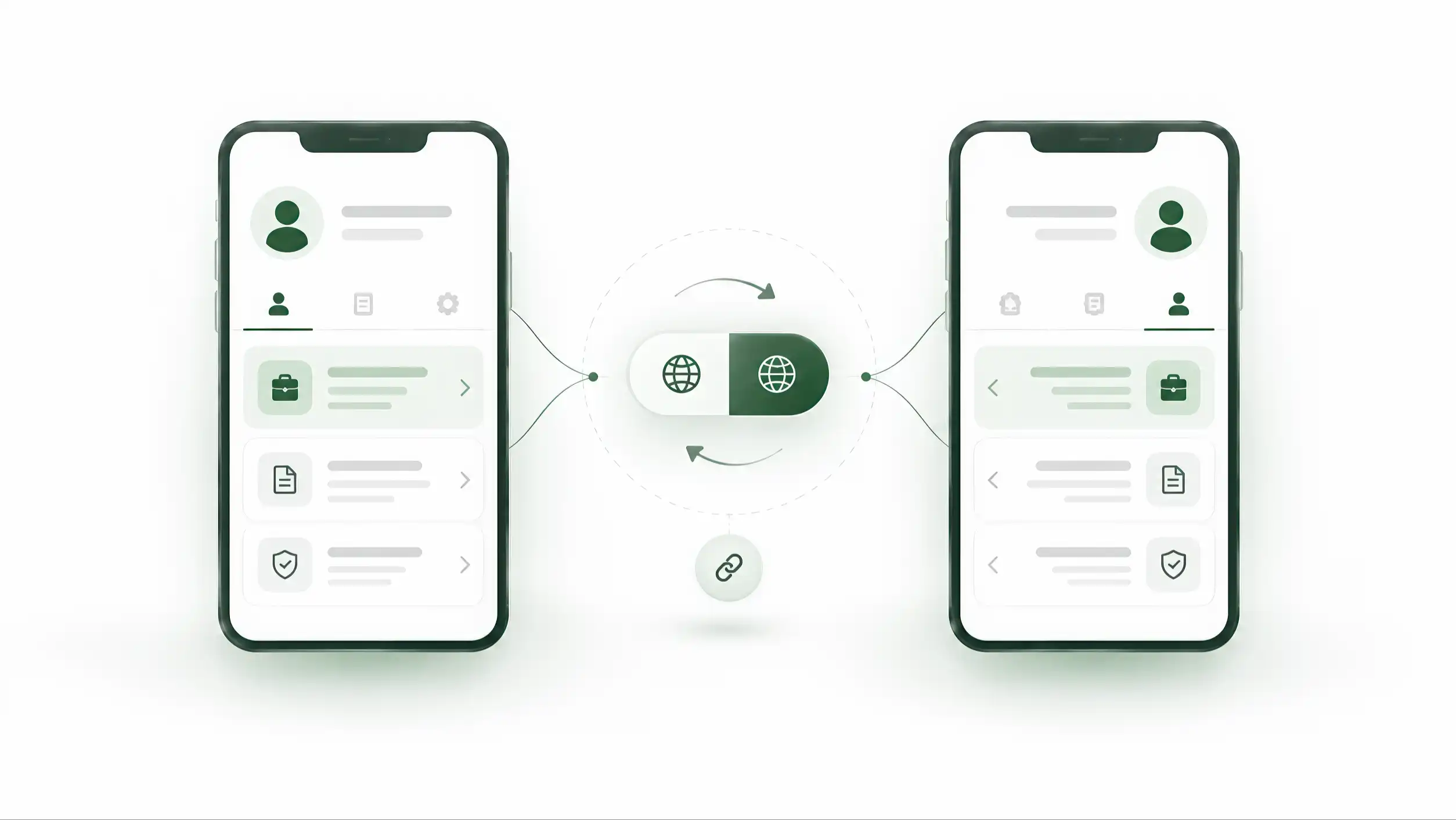
The job can vary by use case. A professional networking profile may primarily help people identify the person and save contact details. A consultant may want qualified visitors to understand the offer and start a conversation. A restaurant profile may route people to a menu, location, or booking flow. A review stand may exist mainly to move satisfied customers to the review destination. A product or pet tag may prioritize identification and contact. The same digital profile technology can support very different journeys.
Defining the job does not mean removing every secondary option. It means knowing which path matters most and which paths are supporting routes. That clarity helps design, because the important information and action can be made easier to find. It also helps analysis, because the team knows what kind of behavior deserves attention.
The stronger question is therefore not “How many people opened the profile?” It is “What did people need after they opened, and did the profile help them complete that path?” The first question measures arrival. The second connects customer purpose, interface behavior, and business intent.
This framing also keeps the other articles in this series distinct. The article about views versus customers examines conversion efficiency and the danger of treating traffic as business success. The measurement article builds a hierarchy of actions and events. The first-seconds article focuses on orientation, trust, speed, and visual priority at the top of the page. This article sits one level above those topics: it explains how to think about the paths people take after arrival.
A practical review can therefore begin with a simple map. Write down the main entry contexts. List the questions visitors are likely to bring. Identify the useful paths the profile should support. Then compare those intended paths with observed behavior. Where do people leave? What do they inspect? Which channel do they choose next? Which paths continue later? Where is the business making assumptions that the data cannot actually prove?
The goal is not to force every visitor into one funnel. Human behavior is more varied than that. The goal is to make the intended routes clear, reduce unnecessary detours, preserve useful options, and understand enough of the journey to improve the experience over time.
A profile open is therefore best treated as the beginning of a conversation between context, information, and action. The meaningful story begins after the page appears. When the business studies that story instead of stopping at the open count, the digital profile becomes more than a smart link. It becomes an observable, improvable part of the customer experience.
Sources
- Mapping Experiences, 2nd Edition — Jim Kalbach — O’Reilly Media
- The Design of Everyday Things — Don Norman — MIT Press / Basic Books
- Don't Make Me Think, Revisited: A Common Sense Approach to Web Usability — Steve Krug — New Riders / Pearson
- Web Analytics 2.0: The Art of Online Accountability & Science of Customer Centricity — Avinash Kaushik — Wiley
- About events — Google Analytics Help