Translation changes words; localization changes the operating experience
A multilingual profile can be translated accurately and still feel foreign. The words may be correct while the experience remains organized around the assumptions of the original language: the reading direction, information order, button labels, spacing, form structure, examples, date formats, and even the way missing content behaves. Translation solves the wording problem. Localization asks whether the whole product behaves naturally for the person using that language.
That distinction matters because a digital profile is not a document. It is an interface with identity, actions, navigation, forms, metadata, media, and state. Every one of those layers can carry language assumptions. A heading may expand in Arabic and wrap into a button. A line of English may fit beside an icon while its Arabic equivalent needs a different layout. A form may ask for “first name” and “last name” because the original data model assumed a naming convention that is not universal. A language switch may change the words but accidentally send the user to a different page. None of those failures is fixed by better translation alone.
Bert Esselink’s localization work is useful because it treats localization as a coordinated engineering, editorial, and quality process for multilingual products. The practical lesson is to stop thinking of the second language as a layer added at the end. Language requirements influence the content model, layout, routing, validation, testing, and release process from the beginning.
A strong multilingual profile therefore shares one underlying truth while allowing each language version to express that truth in a way that fits its readers. The identity, offer, business facts, prices, and conditions should remain aligned. The presentation does not need to be identical. The goal is not visual symmetry between English and Arabic. The goal is equivalent usability, equivalent meaning, and equivalent access to the same useful actions.
A practical consequence is that localization decisions should be documented as product rules, not remembered as exceptions. Teams benefit from a small localization specification that states which fields are shared, which are language-specific, which components mirror, which values preserve their original form, and what happens when a translation is missing. That document becomes useful to designers, developers, editors, and testers because it turns language quality into something reproducible. It also reduces the common situation in which the Arabic version depends on one person remembering why a particular component was patched six months earlier.
RTL is a layout system, not right-aligned LTR
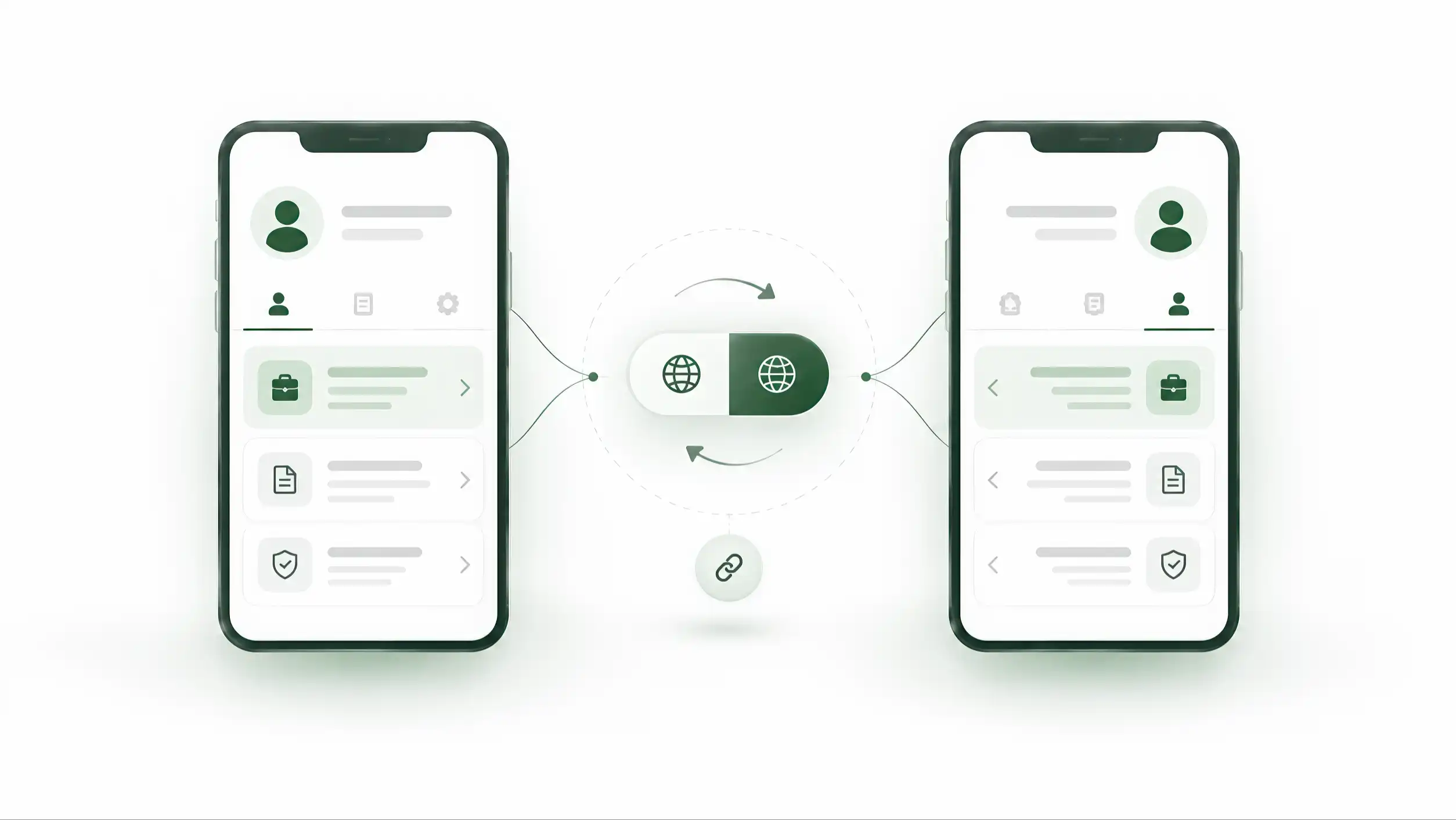
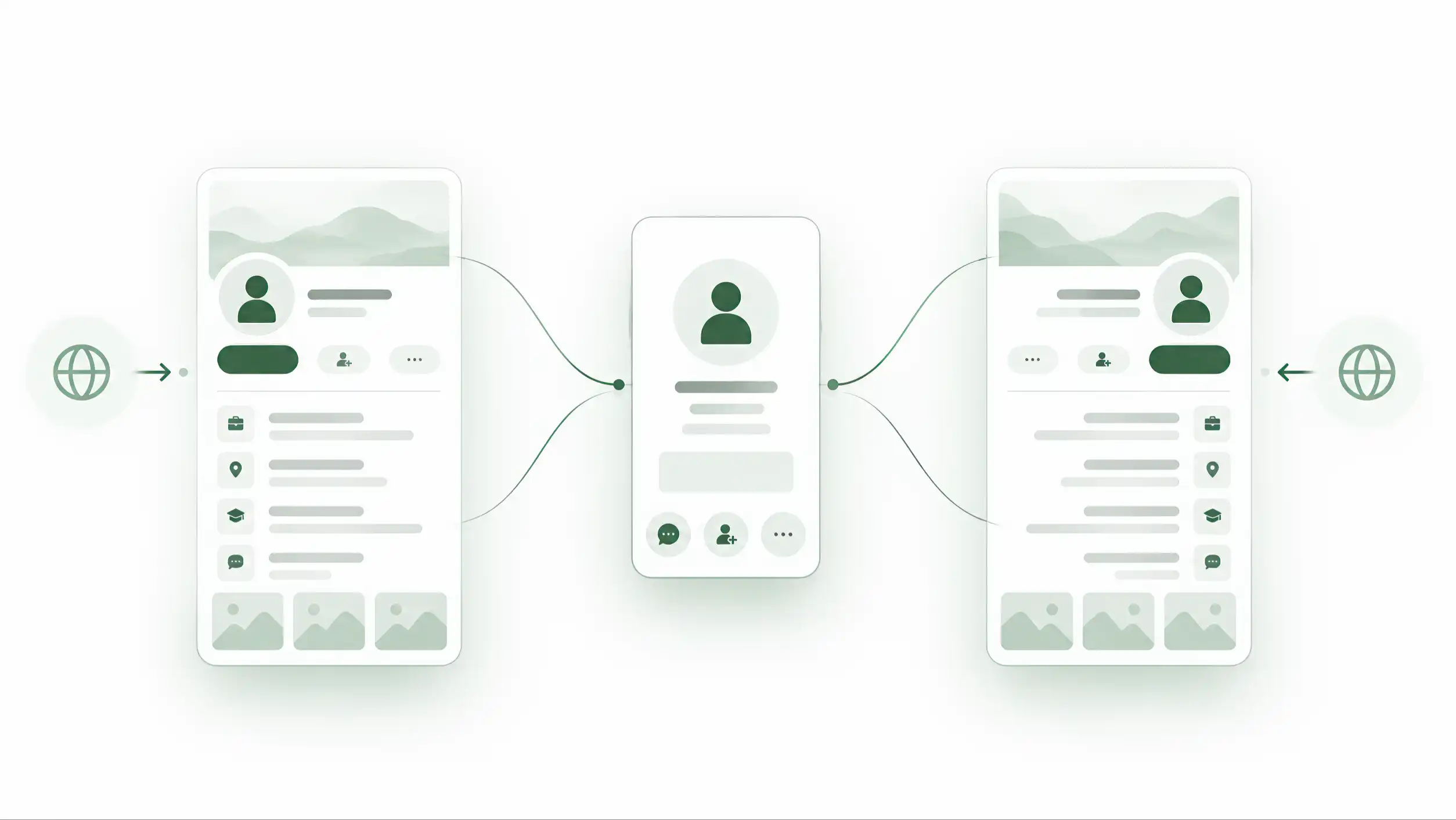
Right-to-left support is often reduced to a cosmetic instruction: move the text to the right. That is not enough. Arabic changes the base direction in which the interface is read and scanned, so direction affects structural order, alignment, navigation flow, directional icons, control placement, tables, forms, and the handling of mixed Arabic and Latin text.
For a page whose primary language is Arabic, direction should be established at the structural level rather than recreated manually on individual blocks. W3C guidance recommends using the document direction for the page and changing direction only where the content genuinely requires it. This allows the browser to treat the interface as an RTL document instead of a left-to-right page with right-aligned paragraphs.
Mixed-direction content is where weak implementations become obvious. An Arabic sentence may contain a URL, an email address, a product code, a phone number, a price, or an English brand name. Those fragments have different directional behavior. The Unicode Bidirectional Algorithm exists precisely because text can contain strong RTL characters, strong LTR characters, numbers, punctuation, and neutral characters in the same line. Correct display should rely on semantic direction and proper isolation, not on inserting spaces until the line looks acceptable on one device.
Mirroring also requires judgment. A “back” arrow is directional and may need to reverse. A play icon, company logo, QR code, or universally recognized symbol usually should not be mirrored merely because the page is Arabic. The question is whether the symbol communicates physical or reading direction, not whether it happens to sit on one side of the screen in English.
A useful QA method is to test the real difficult strings: Arabic plus English names, long URLs, phone numbers, currencies, brackets, dates, and percentages. If those remain readable across mobile widths without manual hacks, the RTL system is probably structural. If they only look right in carefully chosen examples, the page is still being styled around the language rather than designed for it.
Direction should also survive responsive changes. A layout that is correct at desktop width can become wrong when cards stack, controls collapse into menus, or sticky actions move to the bottom of the screen. The order in the DOM, the visual order created by CSS, and the reading order exposed to assistive technology should remain coherent. This is why RTL QA cannot be limited to a single screenshot. The same component should be checked when horizontal rows become vertical stacks, when labels wrap to two lines, and when secondary actions move into overflow menus.
Alt text EN
Same digital profile structure localized for LTR and RTL with correct mixed-direction content
Keep the facts aligned, but let each language write naturally
Multilingual consistency does not require sentence-by-sentence equivalence. English and Arabic can communicate the same business truth with different sentence length, rhythm, emphasis, and order. In fact, forcing literal symmetry often produces the opposite of consistency: one language sounds natural while the other feels like a translation artifact.
The right invariant is meaning. The company name, service scope, price, eligibility, delivery terms, warranty conditions, contact details, and other factual claims should agree across languages. The editorial expression around those facts can adapt. A short English label may need a fuller Arabic phrase. A sentence that leads with the benefit in English may sound better when Arabic establishes context first. A call-to-action can use different wording if both versions ask for the same action with the same level of commitment.
This suggests a useful content architecture: separate canonical facts from localized presentation. Facts that must remain identical should come from shared structured data wherever possible. Editorial fields can then be maintained per language. That reduces two common risks at the same time: robotic literal translation and factual drift between independent copies.
Factual drift deserves its own control. If the English version changes a plan condition, opening hour, service name, or business description, the Arabic version should enter a visible review state rather than silently remaining stale. “Translated” is not a permanent property. Localized content has a lifecycle, and change management is part of localization quality.
The review process should therefore ask two different questions. First: is this version natural and clear in its own language? Second: does it still match the underlying truth shared with the other language? A native-language editor answers the first. A parity check answers the second. Combining both is stronger than treating translation approval as a one-time checkbox.
For ADMAL-style profiles, this principle is especially important because users may switch language at any moment. They should encounter the same identity and offer, not two loosely related profiles maintained by different habits.
The strongest workflows also distinguish a translation change from a business-fact change. Editing punctuation in the English description should not necessarily trigger the same review process as changing a price or eligibility condition. Conversely, a factual change should not be considered complete merely because one language was updated. Classifying changes by consequence helps teams focus review effort where divergence would matter most to customers while still allowing language editors to improve style independently.
Fallback must be a field-level policy, not an accident
Real multilingual profiles are rarely complete in every language at the same moment. A user may fill the English biography and leave the Arabic biography empty. A service title may be localized while its long description is not. A customer-entered business name may intentionally remain in its original language. A system button, by contrast, should not disappear merely because a translation file is incomplete.
Without an explicit fallback policy, those cases produce random behavior. One field shows English, another becomes blank, another repeats a machine-translated placeholder, and a fourth causes the whole component to vanish. The page may still function, but it no longer communicates whether the missing content is intentional, unavailable, or broken.
The better approach is to classify fields. System interface labels should normally have required localized strings. User-entered proper names, URLs, emails, and some product codes may remain in their original form. Optional editorial fields can use a defined fallback, such as showing the English value when the Arabic field is empty. Sensitive or high-consequence content may deserve stricter rules if presenting an outdated fallback would mislead the user. The exact policy depends on the product, but it should be predictable.
Fallback also needs direction and language semantics. If an Arabic page displays an English biography because the localized version is missing, that block should still be identifiable as English and render left-to-right where appropriate. A fallback should preserve usability rather than merely fill space.
There is also a freshness problem. A translated value may exist but be older than the source value it is supposed to represent. Systems that only check whether a field is empty cannot detect that situation. A practical editorial workflow records when localized content was last reviewed against the source or marks it for review when a canonical fact changes.
The goal is not to eliminate mixed-language reality. Businesses often contain names, brands, codes, and customer-entered text that should remain unchanged. The goal is to make every language transition deliberate. When a user encounters English inside an Arabic profile, it should be because policy chose that outcome, not because the system ran out of ideas.
A fallback matrix can be simple enough to operate. For each field type, define the source of truth, whether fallback is allowed, the fallback language, whether the field should be hidden when empty, and whether a source change invalidates the localized value. This avoids embedding policy across dozens of templates. It also makes QA testable: testers can deliberately remove an Arabic value and verify that the expected English fallback, hidden state, or publication warning appears instead of guessing what the product was meant to do.
Language switching should preserve the user’s exact context
Changing language is usually a presentation choice for the same underlying profile, not a request to begin a new journey. If a visitor is looking at a specific business profile, service, review page, or item and switches from English to Arabic, the system should keep them on that same object whenever the localized view exists. Sending them to a generic homepage breaks context at the exact moment the interface is supposed to become easier to understand.
The same principle applies inside the page. A language change should not unnecessarily discard the selected tab, close an important panel, reset a filtered list, or erase form data the visitor has already entered. Some state will legitimately need to reset, especially when the new language changes available content, but loss of context should be a reasoned exception rather than default behavior.
Language preference also needs sensible precedence. A stored user preference can improve repeat visits, and browser language can provide a useful first hint, but neither should trap the user. The visible switcher must remain available, and an explicit choice should normally override automatic detection. A bilingual visitor in the UAE may use an English-language device and still want the Arabic profile, or the reverse.
The switcher itself should be understandable without relying on flags. Flags represent countries, while languages cross borders. Using native language names such as “English” and “العربية” is usually clearer, especially in products used across regions. The control should also have an accessible label and a stable position so users do not have to search for it after switching.
This article does not need to re-explain the route and identifier architecture covered elsewhere in the series. The UX rule is simpler: keep the visitor anchored to the same thing. A strong multilingual system makes the language layer feel reversible and low-risk. The user can change how the profile is presented without wondering whether they have left the profile, lost their place, or entered a different version of the business.
Context preservation is especially important when the user arrived through a deep link. A person may open a profile from a QR code, a message, a saved bookmark, or a search result and then decide to switch language after recognizing the destination. The switch should not erase the specificity of that arrival. Even when the language routes differ internally, the experience should preserve the same content object and useful next action so the user does not have to reconstruct how they reached it.
Machines need language and direction information too
Localization is visible to people, but it is also interpreted by browsers, assistive technologies, search systems, and other software. A page can look correct to a sighted user while still communicating the wrong language or direction to machines. That weakens accessibility, pronunciation, language-sensitive styling, and automated processing.
W3C guidance recommends declaring the default language of an HTML document with the lang attribute on the html element. Content in another language can then be marked locally. This is particularly useful on Arabic pages that contain English company names, quotations, or fallback fields. Language markup gives software a better chance to pronounce text correctly, choose language-sensitive behavior, and distinguish a genuine language change from ordinary punctuation or branding.
Direction is a separate property. An Arabic-language block generally needs RTL base direction, while a nested URL, email address, code, or other left-to-right fragment may need isolation or its own direction handling. Treating language and direction as the same switch is a common source of bugs because a language can sometimes be written in more than one script, and mixed-script content is normal on the Web.
Metadata should follow the localized experience as well. The page title, meta description, open-graph text, structured labels, and alternate-language relationships should describe the language version the user actually sees. Reusing English metadata on an Arabic page creates an inconsistent product even when the visible body is translated. Search engines and social previews may expose that inconsistency before the visitor reaches the profile.
The technical model should therefore distinguish three ideas: the identity of the underlying profile, the language presentation being requested, and the language of each individual content fragment. Those layers often align, but they are not identical. A shared business name may remain unchanged across languages while the description changes. An Arabic page may intentionally contain an English URL. A fallback block may borrow content from another locale.
Good machine-readable localization makes those relationships explicit instead of forcing software to infer them from visual alignment. It is invisible when it works, which is exactly the point.
This machine-readable layer should be included in QA rather than assumed from appearance. Inspect the rendered HTML, not only the screenshot: verify the page-level language and direction, inspect nested language changes, check that alternate-language URLs actually resolve to the equivalent content, and confirm that localized metadata is present. These checks are inexpensive compared with debugging accessibility or localization regressions after publication, and they protect against failures when templates are reused across many profiles.
Forms and structured data must fit the locale, not just the language
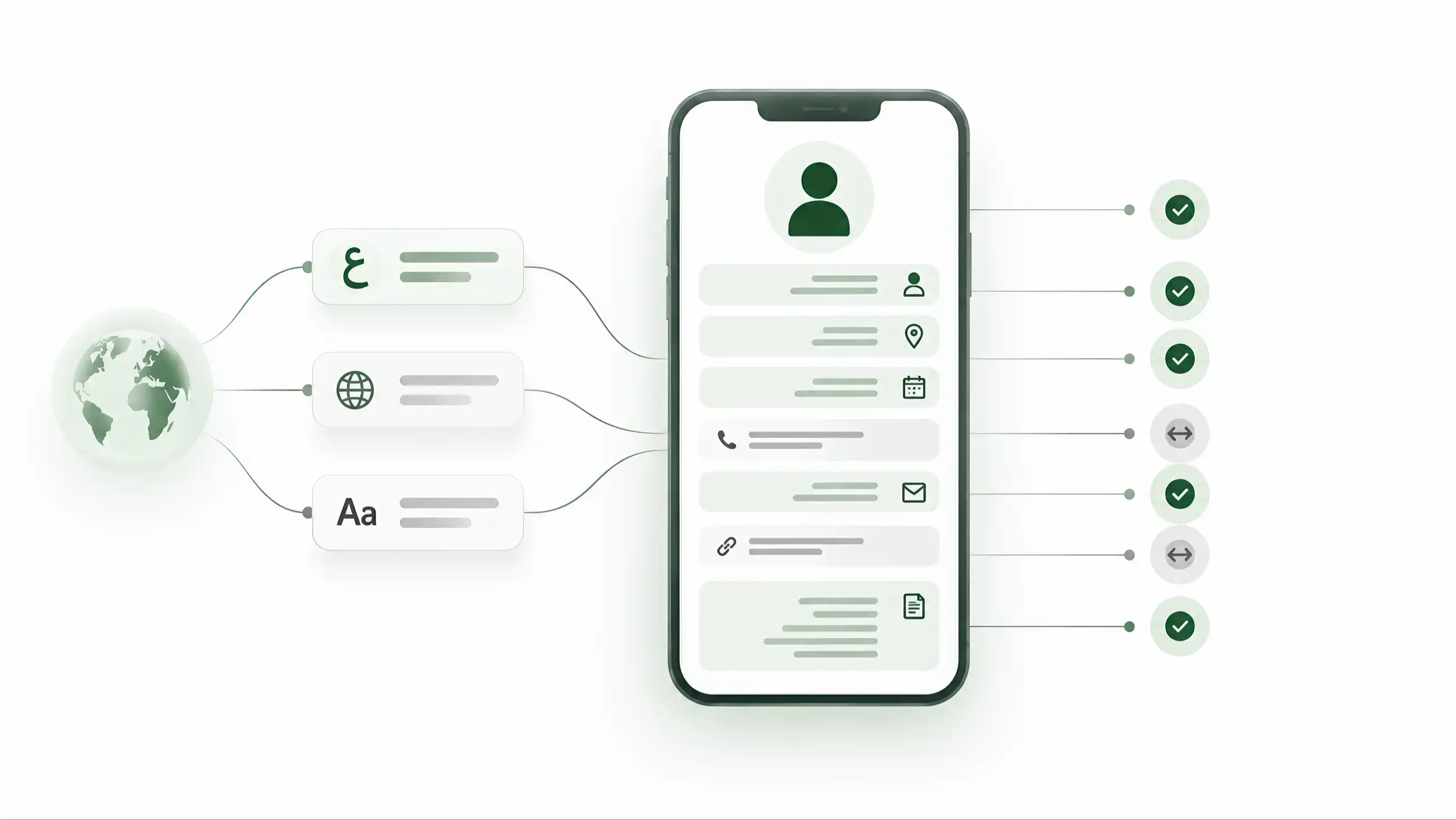
A localized profile can look polished and still fail when the user starts typing. Forms expose assumptions that static content can hide: how names are structured, how phone numbers are written, which address fields exist, how dates are displayed, which keyboard is expected, and what characters validation rules allow.
W3C’s guidance on personal names is a useful warning against universal templates. Not every person has a name that fits neatly into “first name” and “last name,” and name order varies across cultures. The correct data model depends on what the application actually needs to do with the name. A contact form that only needs a display name may be better served by one flexible full-name field than by forcing a culturally specific split.
Language and locale should also be separated. “Arabic” is a language choice; it does not uniquely determine country, phone prefix, currency, date convention, address structure, or legal geography. An Arabic-speaking visitor in the UAE and an Arabic-speaking visitor elsewhere may share interface language while living in different locale contexts. English has the same issue: English in the UAE does not automatically imply US formatting.
The interface can adapt display formats while keeping machine values stable underneath. Dates, for example, can be stored in an unambiguous internal representation and displayed in the user’s locale. Phone fields can accept international prefixes rather than assuming one market. Validation should recognize realistic spaces, hyphens, scripts, and lengths instead of rejecting valid data because it does not match the developer’s local example.
Localization also includes error states. A validation message must appear in the same language as the form and explain the actual problem. Placeholder examples should match the expected market. The cursor, alignment, input direction, and keyboard hints should not fight the user when Arabic and Latin data appear in the same form.
This is deliberately different from Article 10’s question of how much customer data should be collected. Here the question is structural: once a field is justified, can people in the target language and locale enter a valid value naturally, or does the form force everyone into one cultural schema?
Locale-sensitive design also benefits from separating display from storage. A user may see a date, phone number, or numeric value in a familiar local format while the system stores a normalized representation for processing. That separation prevents presentation conventions from becoming database assumptions. It also makes later expansion easier: adding another market can change how values are shown and validated without rewriting historical records simply because punctuation, field order, or preferred formatting differs.
Alt text EN
Localized form adapting name, phone, date, direction, and validation rules to locale
Multilingual QA is a release discipline, not a final proofreading pass
The last localization failure often appears after the translation is approved. A long Arabic title wraps over a button. An English URL breaks the direction of an Arabic sentence. A missing field triggers the wrong fallback. The language switch works from the homepage but loses context inside a profile. A translated error message overflows on a narrow phone. These are product defects, not proofreading mistakes.
A useful QA matrix combines language, viewport, content state, and interaction state. Test English and Arabic at the smallest supported mobile width, common phones, tablet, and desktop. Test short and long names, empty optional fields, long service titles, mixed Arabic-English strings, URLs, email addresses, phone numbers, prices, dates, numbers, and punctuation. Test the page before and after switching language. Test forms with both Arabic and Latin input. Test what happens when a localized field is missing and when a source field changes after translation.
Native-language review remains important, but it should not be the only gate. A reviewer can tell whether the Arabic sounds natural and whether the hierarchy makes sense to an Arabic reader. Automated checks can catch missing translations, untranslated system keys, invalid language tags, unexpected LTR blocks, broken alternate links, and text overflow. Visual regression can detect layout drift. None of those methods replaces the others.
Release ownership matters too. If nobody owns translation freshness, localized pages gradually diverge. A practical workflow defines who updates shared facts, who reviews language-specific copy, which changes invalidate existing translations, and what “ready” means for each language. That turns multilingual quality from heroic cleanup into a repeatable operating process.
The acceptance standard should be equivalent experience, not identical screenshots. Both language versions should let the visitor identify the profile, understand the offer, navigate, act, submit valid information, and recover from errors without extra friction caused by language. Layouts may differ to achieve that result.
When localization is built this way, a second language is not a duplicate page. It is another first-class presentation of the same product, with its own linguistic quality and interface requirements but the same underlying truth.
Finally, QA should include content operations after launch. Add a new service, edit a business name, expire a promotion, remove an optional Arabic field, and change a shared fact, then observe both languages. Multilingual systems often pass their launch checklist but fail during ordinary editing because update workflows were never tested. The real standard is not whether the first published version looked correct; it is whether routine future changes can keep every supported language correct without creating manual repair work each time.
Sources
- A Practical Guide to Localization — Bert Esselink — John Benjamins Publishing Company
- Structural markup and right-to-left text in HTML — W3C Internationalization
- Declaring language in HTML — W3C Internationalization
- Unicode Standard Annex #9: Unicode Bidirectional Algorithm — Unicode Consortium
- Personal names around the world — W3C Internationalization — Richard Ishida