QUESTIONS & ANSWERS
Menu / Services Questions & Answers
What is ADMAL Menu / Services, and what can it be used for beyond a traditional food menu?
+
ADMAL Menu / Services is a flexible digital business interface, not a restaurant-only menu. It can be used for food menus, services and pricing, products for display, catalogues, offers or work images, and then guide the visitor to the next useful action.
A normal QR opening a fixed PDF usually provides one destination without a management, interaction or analytics layer. ADMAL Menu / Services adds a UID, editable content, Visual Menu, Quick Products, images, files, Add/Exchange Contact, external links, Like, translation, sharing and Analytics, while direct buying and payment are not currently enabled inside the experience.
Is Menu / Services only for restaurants, or can it also be used for services, products, pricing, catalogues and offers?
+
ADMAL Menu / Services is a flexible digital business interface, not a restaurant-only menu. It can be used for food menus, services and pricing, products for display, catalogues, offers or work images, and then guide the visitor to the next useful action.
What is the difference between Visual Menu and Quick Products, and when is each option more suitable?
+
Visual Menu fits cases where visual presentation, image-based menus or files are the main experience. It can present multiple images or visual menu content in a mobile-friendly way instead of entering every item as a separate record.
Quick Products presents individual items inside the page. Each item can use the fields available in the current editor, such as image, title, description and price, and the same structure can represent a service, package or product for display; being listed does not mean the item can be purchased inside ADMAL.
How do Quick Products work, and what can be added to each product or service?
+
Quick Products presents individual items inside the page. Each item can use the fields available in the current editor, such as image, title, description and price, and the same structure can represent a service, package or product for display; being listed does not mean the item can be purchased inside ADMAL.
The current editor exposes up to 10 Quick Products. They should be organized clearly, using image, title, description and price to help visitors understand and compare options instead of overloading a single item with too much information.
Can I add an image, title, description and price to each item or service independently?
+
Quick Products presents individual items inside the page. Each item can use the fields available in the current editor, such as image, title, description and price, and the same structure can represent a service, package or product for display; being listed does not mean the item can be purchased inside ADMAL.
Can Quick Products be used to present services instead of only physical products?
+
Quick Products presents individual items inside the page. Each item can use the fields available in the current editor, such as image, title, description and price, and the same structure can represent a service, package or product for display; being listed does not mean the item can be purchased inside ADMAL.
Menu / Services is currently not an e-commerce checkout and does not perform Cart, Checkout or payment collection. Products and services are for presentation, organization and interaction; after viewing them, the visitor can be sent to communication, booking, a form or another suitable destination, while direct sales and payment remain under development.
Can images, titles, descriptions and prices be updated later without changing the link, QR or NFC?
+
Images, titles, descriptions, prices, links, files and other digital content can be updated while the same identity and UID remain in use. Printed, engraved or manufactured elements on the physical product do not change automatically, so page updates should be separated from physical remanufacturing.
The same Menu / Services page can be reached through a direct Link, QR and NFC on a compatible product, all pointing to the same UID. This allows the same content to be shared online or from a physical product without managing a separate copy for each access method.
Can images be used as a portfolio or gallery of services and projects instead of only product photos?
+
Images can be used as a gallery for work, services, projects or results, not only as food or product photos. This makes the page suitable for visually driven businesses, and the gallery can be refreshed over time to reflect current work.
How does Visual Menu work, and can I build a menu that is mainly image-based?
+
Visual Menu fits cases where visual presentation, image-based menus or files are the main experience. It can present multiple images or visual menu content in a mobile-friendly way instead of entering every item as a separate record.
Can a PDF be used as a menu or catalogue instead of entering every item individually?
+
PDF files can be used as menus, catalogues, price lists or service documents, and a public external file such as Google Drive or another sharing service can be linked instead of storing a heavy copy inside ADMAL. The destination should open directly and sharing permissions must allow visitors to access it.
Does the menu file have to be uploaded to ADMAL, or can I link an external file such as Google Drive?
+
PDF files can be used as menus, catalogues, price lists or service documents, and a public external file such as Google Drive or another sharing service can be linked instead of storing a heavy copy inside ADMAL. The destination should open directly and sharing permissions must allow visitors to access it.
What is the benefit of using Google Drive or another external PDF link when the menu changes frequently?
+
PDF files can be used as menus, catalogues, price lists or service documents, and a public external file such as Google Drive or another sharing service can be linked instead of storing a heavy copy inside ADMAL. The destination should open directly and sharing permissions must allow visitors to access it.
Images, titles, descriptions, prices, links, files and other digital content can be updated while the same identity and UID remain in use. Printed, engraved or manufactured elements on the physical product do not change automatically, so page updates should be separated from physical remanufacturing.
Can images, PDF files and Quick Products be combined in one Menu experience?
+
Visual Menu fits cases where visual presentation, image-based menus or files are the main experience. It can present multiple images or visual menu content in a mobile-friendly way instead of entering every item as a separate record.
Quick Products presents individual items inside the page. Each item can use the fields available in the current editor, such as image, title, description and price, and the same structure can represent a service, package or product for display; being listed does not mean the item can be purchased inside ADMAL.
PDF files can be used as menus, catalogues, price lists or service documents, and a public external file such as Google Drive or another sharing service can be linked instead of storing a heavy copy inside ADMAL. The destination should open directly and sharing permissions must allow visitors to access it.
Can a visitor save the business details as a contact directly from Menu / Services?
+
Add Contact lets the visitor save the business details as a phone contact, while Exchange Contact lets the visitor voluntarily send their own details to the business. This creates two-way communication instead of leaving the page as a one-way display.
What is the difference between Add Contact and Exchange Contact inside Menu / Services?
+
Add Contact lets the visitor save the business details as a phone contact, while Exchange Contact lets the visitor voluntarily send their own details to the business. This creates two-way communication instead of leaving the page as a one-way display.
Can Exchange Contact be used to receive customer details or a request for follow-up?
+
Add Contact lets the visitor save the business details as a phone contact, while Exchange Contact lets the visitor voluntarily send their own details to the business. This creates two-way communication instead of leaving the page as a one-way display.
Can the page receive an enquiry, lead or service request without being an e-commerce store?
+
Add Contact lets the visitor save the business details as a phone contact, while Exchange Contact lets the visitor voluntarily send their own details to the business. This creates two-way communication instead of leaving the page as a one-way display.
Visitors can be directed to WhatsApp, Website, Location, Forms, Calendar, Booking Systems or another external system that provides a valid link. Menu / Services can therefore become a central page that presents the offer and then moves the customer to communication, booking, a form or another service.
Menu / Services is currently not an e-commerce checkout and does not perform Cart, Checkout or payment collection. Products and services are for presentation, organization and interaction; after viewing them, the visitor can be sent to communication, booking, a form or another suitable destination, while direct sales and payment remain under development.
Can Menu / Services connect to an appointment system, Calendar or Booking System?
+
Visitors can be directed to WhatsApp, Website, Location, Forms, Calendar, Booking Systems or another external system that provides a valid link. Menu / Services can therefore become a central page that presents the offer and then moves the customer to communication, booking, a form or another service.
Can the page connect to a service-request form, Form or another external system used by the business?
+
Visitors can be directed to WhatsApp, Website, Location, Forms, Calendar, Booking Systems or another external system that provides a valid link. Menu / Services can therefore become a central page that presents the offer and then moves the customer to communication, booking, a form or another service.
Can the customer be sent to WhatsApp, Website, Location or another business link from the same page?
+
Visitors can be directed to WhatsApp, Website, Location, Forms, Calendar, Booking Systems or another external system that provides a valid link. Menu / Services can therefore become a central page that presents the offer and then moves the customer to communication, booking, a form or another service.
Can ADMAL act as one gateway that brings several external tools and services together under one link?
+
Visitors can be directed to WhatsApp, Website, Location, Forms, Calendar, Booking Systems or another external system that provides a valid link. Menu / Services can therefore become a central page that presents the offer and then moves the customer to communication, booking, a form or another service.
Can a journey start with viewing a product or service and then continue to communication, booking or an external form?
+
ADMAL Menu / Services is a flexible digital business interface, not a restaurant-only menu. It can be used for food menus, services and pricing, products for display, catalogues, offers or work images, and then guide the visitor to the next useful action.
Visitors can be directed to WhatsApp, Website, Location, Forms, Calendar, Booking Systems or another external system that provides a valid link. Menu / Services can therefore become a central page that presents the offer and then moves the customer to communication, booking, a form or another service.
Menu / Services is currently not an e-commerce checkout and does not perform Cart, Checkout or payment collection. Products and services are for presentation, organization and interaction; after viewing them, the visitor can be sent to communication, booking, a form or another suitable destination, while direct sales and payment remain under development.
Can customers buy products or pay directly inside Menu / Services?
+
Menu / Services is currently not an e-commerce checkout and does not perform Cart, Checkout or payment collection. Products and services are for presentation, organization and interaction; after viewing them, the visitor can be sent to communication, booking, a form or another suitable destination, while direct sales and payment remain under development.
If direct buying and payment are not currently available, what can a visitor do after viewing a product or service?
+
Menu / Services is currently not an e-commerce checkout and does not perform Cart, Checkout or payment collection. Products and services are for presentation, organization and interaction; after viewing them, the visitor can be sent to communication, booking, a form or another suitable destination, while direct sales and payment remain under development.
Visitors can be directed to WhatsApp, Website, Location, Forms, Calendar, Booking Systems or another external system that provides a valid link. Menu / Services can therefore become a central page that presents the offer and then moves the customer to communication, booking, a form or another service.
Add Contact lets the visitor save the business details as a phone contact, while Exchange Contact lets the visitor voluntarily send their own details to the business. This creates two-way communication instead of leaving the page as a one-way display.
The Like button is a simple signal of interest or preference for a product or service inside the page. It is not a purchase, payment or formal star-based Review; it can be read together with other engagement signals to understand which items attract more attention.
What does the Like button do inside Menu / Services?
+
The Like button is a simple signal of interest or preference for a product or service inside the page. It is not a purchase, payment or formal star-based Review; it can be read together with other engagement signals to understand which items attract more attention.
Is a Like a purchase or formal Review, or is it simply a signal of interest and preference?
+
The Like button is a simple signal of interest or preference for a product or service inside the page. It is not a purchase, payment or formal star-based Review; it can be read together with other engagement signals to understand which items attract more attention.
Menu / Services is currently not an e-commerce checkout and does not perform Cart, Checkout or payment collection. Products and services are for presentation, organization and interaction; after viewing them, the visitor can be sent to communication, booking, a form or another suitable destination, while direct sales and payment remain under development.
Can Likes help show which products or services attract more visitor interest?
+
The Like button is a simple signal of interest or preference for a product or service inside the page. It is not a purchase, payment or formal star-based Review; it can be read together with other engagement signals to understand which items attract more attention.
Each Menu / Services identity is tied to its UID, allowing Analytics to associate engagement with the correct page. Available indicators can include page opens, stay duration, tracked actions or buttons, and signals such as Likes when they are included in the current reporting system.
Can interest be compared across different items on the same page?
+
The Like button is a simple signal of interest or preference for a product or service inside the page. It is not a purchase, payment or formal star-based Review; it can be read together with other engagement signals to understand which items attract more attention.
Each Menu / Services identity is tied to its UID, allowing Analytics to associate engagement with the correct page. Available indicators can include page opens, stay duration, tracked actions or buttons, and signals such as Likes when they are included in the current reporting system.
How is Menu / Services connected to ADMAL Analytics and tracking?
+
Each Menu / Services identity is tied to its UID, allowing Analytics to associate engagement with the correct page. Available indicators can include page opens, stay duration, tracked actions or buttons, and signals such as Likes when they are included in the current reporting system.
What types of engagement can the business owner monitor after sharing the page?
+
Each Menu / Services identity is tied to its UID, allowing Analytics to associate engagement with the correct page. Available indicators can include page opens, stay duration, tracked actions or buttons, and signals such as Likes when they are included in the current reporting system.
Can I see which buttons, links or items attract the most visitor attention?
+
Each Menu / Services identity is tied to its UID, allowing Analytics to associate engagement with the correct page. Available indicators can include page opens, stay duration, tracked actions or buttons, and signals such as Likes when they are included in the current reporting system.
The Like button is a simple signal of interest or preference for a product or service inside the page. It is not a purchase, payment or formal star-based Review; it can be read together with other engagement signals to understand which items attract more attention.
How do views, stay duration, actions and Likes work together to explain page performance?
+
Each Menu / Services identity is tied to its UID, allowing Analytics to associate engagement with the correct page. Available indicators can include page opens, stay duration, tracked actions or buttons, and signals such as Likes when they are included in the current reporting system.
The Like button is a simple signal of interest or preference for a product or service inside the page. It is not a purchase, payment or formal star-based Review; it can be read together with other engagement signals to understand which items attract more attention.
Does Analytics mean ADMAL automatically knows the identity of every visitor?
+
Analytics do not automatically reveal every visitor identity. Personal data becomes known when the person chooses to submit it through Exchange Contact, a Form or another communication flow; a Like, click or stay duration is a behavioral signal, not personal identification by itself.
When does visitor information actually become known, and what is the difference between tracking and a customer submitting their own details?
+
Analytics do not automatically reveal every visitor identity. Personal data becomes known when the person chooses to submit it through Exchange Contact, a Form or another communication flow; a Like, click or stay duration is a behavioral signal, not personal identification by itself.
Add Contact lets the visitor save the business details as a phone contact, while Exchange Contact lets the visitor voluntarily send their own details to the business. This creates two-way communication instead of leaving the page as a one-way display.
How is each Menu / Services page tied to its UID, and why is an independent digital identity useful?
+
Each Menu / Services identity is tied to its UID, allowing Analytics to associate engagement with the correct page. Available indicators can include page opens, stay duration, tracked actions or buttons, and signals such as Likes when they are included in the current reporting system.
Images, titles, descriptions, prices, links, files and other digital content can be updated while the same identity and UID remain in use. Printed, engraved or manufactured elements on the physical product do not change automatically, so page updates should be separated from physical remanufacturing.
Can the same page be shared through a direct Link, QR and NFC without creating a separate copy for each method?
+
The same Menu / Services page can be reached through a direct Link, QR and NFC on a compatible product, all pointing to the same UID. This allows the same content to be shared online or from a physical product without managing a separate copy for each access method.
Can the page content be updated after the physical product is printed while keeping the same Link, QR and NFC?
+
Images, titles, descriptions, prices, links, files and other digital content can be updated while the same identity and UID remain in use. Printed, engraved or manufactured elements on the physical product do not change automatically, so page updates should be separated from physical remanufacturing.
The same Menu / Services page can be reached through a direct Link, QR and NFC on a compatible product, all pointing to the same UID. This allows the same content to be shared online or from a physical product without managing a separate copy for each access method.
What can be changed digitally, and what may require the physical product to be modified or remade?
+
Images, titles, descriptions, prices, links, files and other digital content can be updated while the same identity and UID remain in use. Printed, engraved or manufactured elements on the physical product do not change automatically, so page updates should be separated from physical remanufacturing.
Can the same Menu / Services page be translated into the seven languages supported by ADMAL when the source content is clear?
+
The same Menu / Services content can be presented in up to 7 supported languages when the original inputs are clear, correct and understandable enough to translate. The translations remain connected to the same digital identity instead of requiring a separate link for every language, which is useful for multilingual audiences.
Does the business need a separate link for every language, or do the languages remain connected to the same digital identity?
+
The same Menu / Services content can be presented in up to 7 supported languages when the original inputs are clear, correct and understandable enough to translate. The translations remain connected to the same digital identity instead of requiring a separate link for every language, which is useful for multilingual audiences.
The same Menu / Services page can be reached through a direct Link, QR and NFC on a compatible product, all pointing to the same UID. This allows the same content to be shared online or from a physical product without managing a separate copy for each access method.
How do Styles differ inside Menu / Services, and is the difference only visual or does it change how content is presented?
+
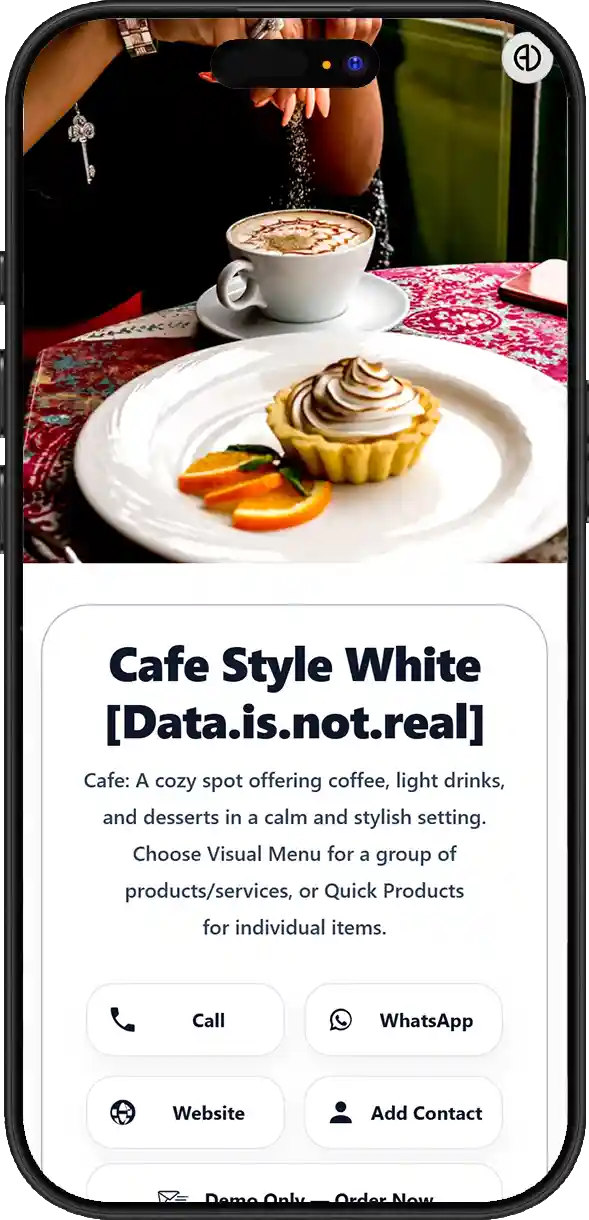
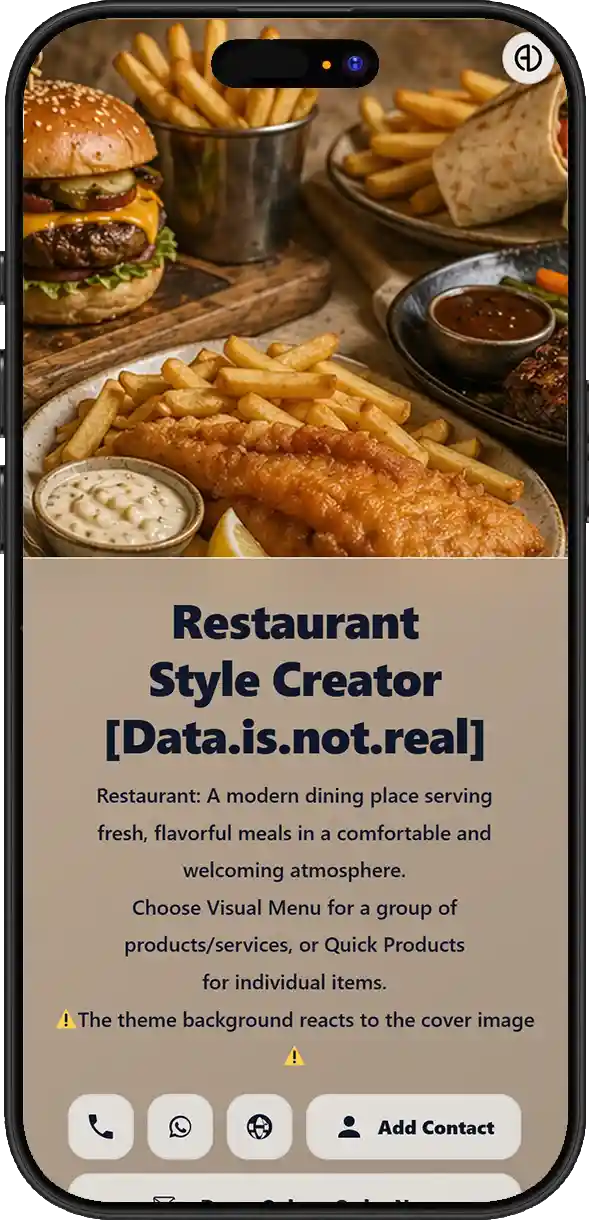
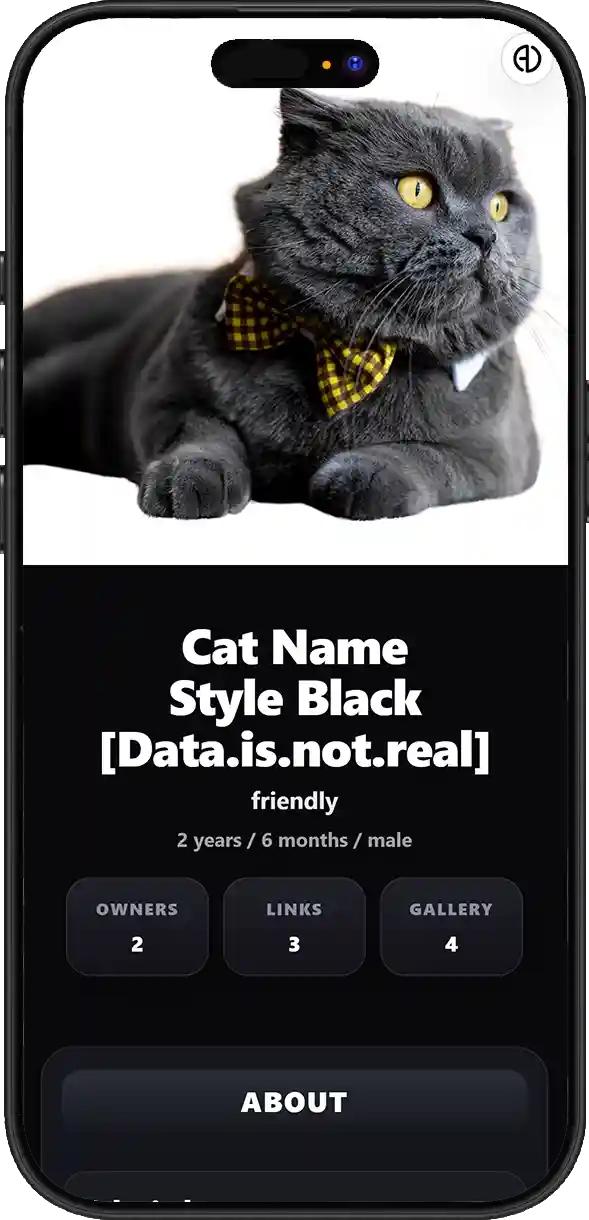
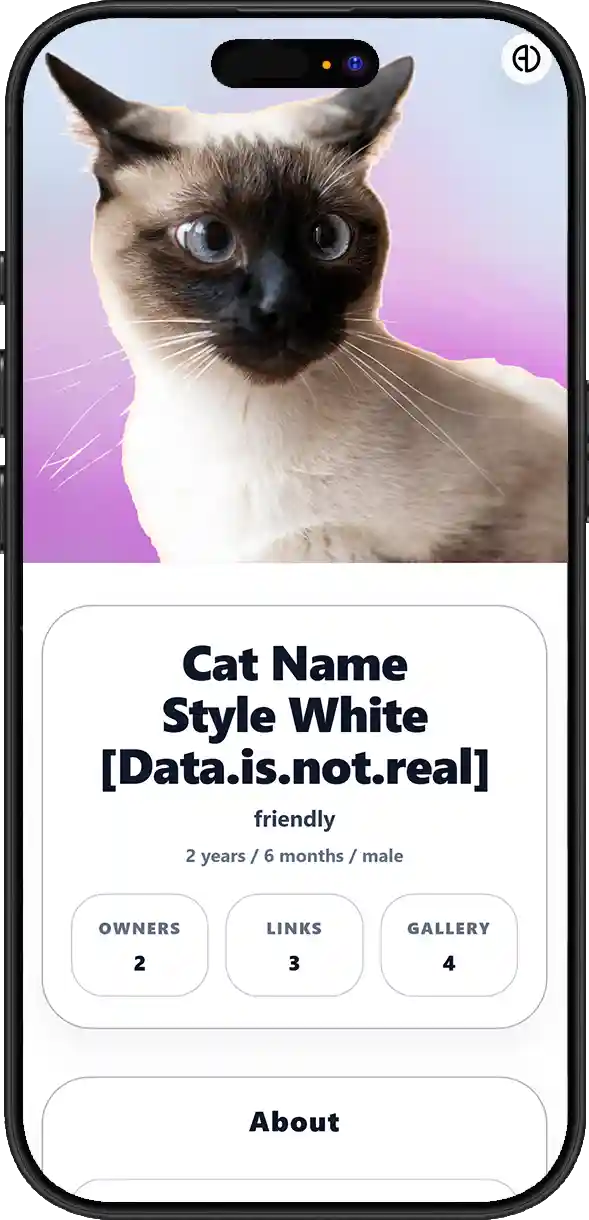
The Page Type defines the Menu / Services function, while the Style controls how content is arranged and emphasized. Some presentations fit a visual menu and image-heavy experience, while others suit faster item or service browsing; the choice should follow how customers consume the content, not appearance alone.
How do I choose the right Style for a visual menu, services, quick items or a more professional business presentation?
+
The Page Type defines the Menu / Services function, while the Style controls how content is arranged and emphasized. Some presentations fit a visual menu and image-heavy experience, while others suit faster item or service browsing; the choice should follow how customers consume the content, not appearance alone.
Can Menu / Services start as a simple menu and later grow into a broader experience with images, files, links, booking and communication?
+
Images, titles, descriptions, prices, links, files and other digital content can be updated while the same identity and UID remain in use. Printed, engraved or manufactured elements on the physical product do not change automatically, so page updates should be separated from physical remanufacturing.
Visitors can be directed to WhatsApp, Website, Location, Forms, Calendar, Booking Systems or another external system that provides a valid link. Menu / Services can therefore become a central page that presents the offer and then moves the customer to communication, booking, a form or another service.
Visual Menu fits cases where visual presentation, image-based menus or files are the main experience. It can present multiple images or visual menu content in a mobile-friendly way instead of entering every item as a separate record.
Quick Products presents individual items inside the page. Each item can use the fields available in the current editor, such as image, title, description and price, and the same structure can represent a service, package or product for display; being listed does not mean the item can be purchased inside ADMAL.
What is the real difference between ADMAL Menu / Services and a normal QR code that opens a fixed PDF or traditional menu page?
+
A normal QR opening a fixed PDF usually provides one destination without a management, interaction or analytics layer. ADMAL Menu / Services adds a UID, editable content, Visual Menu, Quick Products, images, files, Add/Exchange Contact, external links, Like, translation, sharing and Analytics, while direct buying and payment are not currently enabled inside the experience.